Five Technologies, One Standard
Every coating is REACH compliant for EU import and salt-spray tested. From 150h Bright Tin to 500h+ HI-TECH Chemical — matched to water type and target species.
HI-TECH Chemical Coated™ — Technical Definition
A multi-layer fluoropolymer-based coating applied in controlled-environment lines. Three layers: anti-corrosion base → chemical bonding mid-layer → low-friction top coat. Cured at controlled temperature and humidity to achieve 500h+ ASTM B117 salt spray rating. Resistant to UV degradation, saltwater immersion, and repeated casting abrasion.
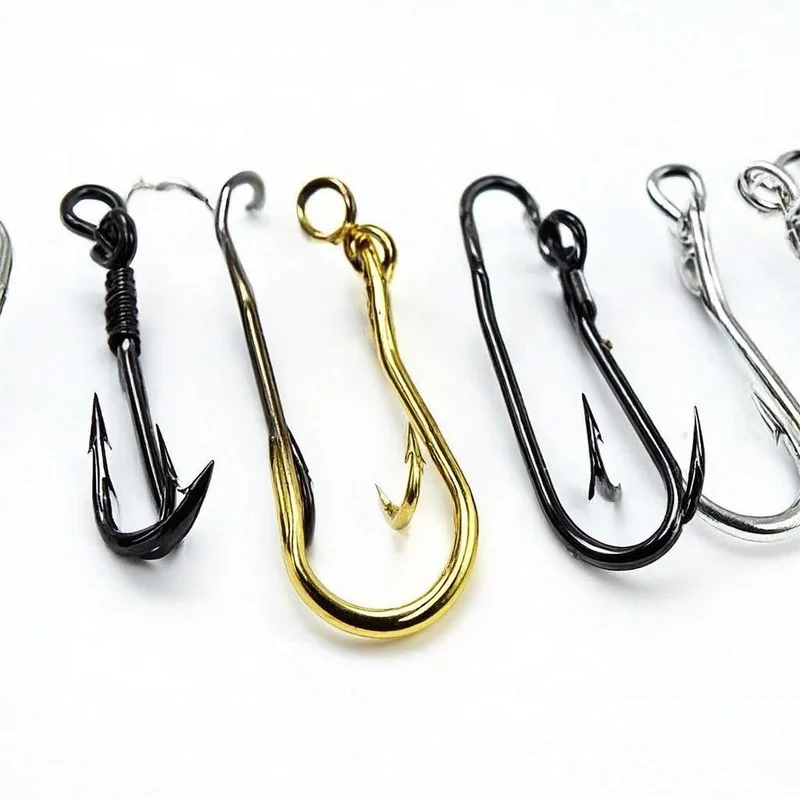
High-carbon steel base
All sizes available
Depends on wire gauge
Coating Performance
| Coating | Salt Spray | Failure Mode | Appearance | Surface | Best Environment |
|---|---|---|---|---|---|
| HI-TECH Chemical | 500h+ | Mechanical abrasion only — coating peels only if bare steel is exposed through deep scratching | Matte gunmetal | Nano-textured | Saltwater, offshore, tropics |
| Black Nickel | 300h | Edge wear at high-friction contact points; rust initiates at hook eye and bend within 100–150h salt fog | Deep charcoal | Smooth matte | Freshwater, low-light stealth |
| 24K Gold | 250h | Galvanic corrosion when paired with dissimilar metal split rings or swivels; cosmetic tarnish before structural failure | Bright gold | Polished | Premium brands, non-corrosive |
| Bright Tin | 150h | Uniform surface oxidation; coating turns dull grey, then red rust spots appear at 120–150h under ASTM B117 | Silver-white | Smooth | Budget-conscious freshwater |
| Nickel | 200h | Pitting corrosion in stagnant saltwater; localised rust spots form where coating porosity allows electrolyte contact with base steel | Classic silver | Smooth | General purpose, all waters |
All salt spray ratings tested to ASTM B117 standard. REACH compliant for EU import.
How We Test

Salt Spray Chamber
Every coating batch undergoes ASTM B117 salt spray testing in our in-house chamber. Hooks are suspended in a 5% NaCl fog at 35°C — the accelerated equivalent of months in saltwater. We pull samples at intervals and inspect for rust formation under 10× magnification.
- ▸ 5% NaCl fog at 35°C continuous exposure
- ▸ Inspection at 24/48/100/200/300/500 hours
- ▸ Results documented per batch for traceability
PTFE-Enhanced Nano Coat
Our premium coatings incorporate PTFE (polytetrafluoroethylene) particles to reduce surface friction. PTFE has one of the lowest coefficients of friction of any solid — lower than graphite or molybdenum disulfide. A lower-friction coating surface reduces the force required for hook penetration. PTFE-enhanced coatings are available as an upgrade on select hook models.
- ▸ PTFE particles reduce surface friction coefficient
- ▸ Compatible with all HI-TECH Chemical base coats
- ▸ REACH compliant — no PFOA/PFOS
High-Carbon Alloy Base
Coatings protect — but the steel underneath determines the hook's life. All our hooks start with high-carbon alloy wire, heat-treated to optimal hardness before coating. This two-stage process — temper then coat — ensures the coating bonds to a stable substrate that won't shift or micro-crack under load.
- ▸ High-carbon alloy steel base
- ▸ Heat-treated before coating for stability
- ▸ ISO certified manufacturing process
What Happens Inside the Salt Spray Chamber
ASTM B117 is the industry-standard accelerated corrosion test. Coated hooks are suspended in a sealed chamber at 35°C under continuous 5% NaCl fog. Samples are pulled at fixed intervals and inspected under 10× magnification. Below is what each interval reveals about coating quality.
Visual Inspection Under 10× Magnification
Every hook in the test batch is photographed and inspected before entering the chamber. Surface uniformity is checked — any pre-existing coating voids, scratches, or application inconsistencies are documented. Only hooks passing this baseline inspection proceed to salt fog exposure. This ensures test failures are attributable to coating performance, not manufacturing defects.
Early Oxidation Check
The first inspection targets coating adhesion failures. Any coating that delaminates at edges — particularly the hook eye, bend apex, and point — is flagged. Bright Tin begins to show uniform dulling at this stage. HI-TECH Chemical Coated, Black Nickel, and Nickel show no visible change.
Coating Integrity Midpoint
At 100 hours, the test has simulated months of saltwater exposure. Bright Tin typically shows first red rust spots at high-friction zones. Nickel may develop pinpoint pitting if the coating has microscopic porosity. Black Nickel shows edge darkening but no red rust. 24K Gold remains bright but may show galvanic reaction at contact points with dissimilar metals. HI-TECH Chemical Coated shows no change — the fluoropolymer barrier is intact.
Differentiation Point
Bright Tin has fully oxidised — the coating is no longer protective, and red rust is widespread. Nickel shows localised rust at pore sites but the coating remains largely intact. Black Nickel maintains coverage with edge wear visible. 24K Gold holds at 200h but cosmetic tarnish is apparent. HI-TECH Chemical Coated: no red rust, no peeling, no edge degradation.
Black Nickel & 24K Gold Reach Their Limit
Black Nickel begins to show red rust at high-wear contact points — the hook eye and shank areas that contact split rings. 24K Gold may show galvanic corrosion if tested with dissimilar metal attachments. Nickel continues to pit but the base steel remains covered. HI-TECH Chemical Coated: still no red rust.
HI-TECH Chemical Coated — End of Standard Test Window
At 500 hours, the test concludes. HI-TECH Chemical Coated hooks show no red rust — the multi-layer fluoropolymer barrier has withstood the equivalent of years of saltwater exposure. Inspection under 10× magnification confirms no edge lifting, no pitting, and no coating delamination. This is the rating we publish: 500h+ to first red rust per ASTM B117. Production samples from each batch are tested to this standard for traceability.
Timeline describes typical coating behaviour under ASTM B117 accelerated corrosion testing. Individual results may vary by hook model, wire gauge, and exposure conditions. All ratings refer to time-to-first-red-rust, not total coating failure.
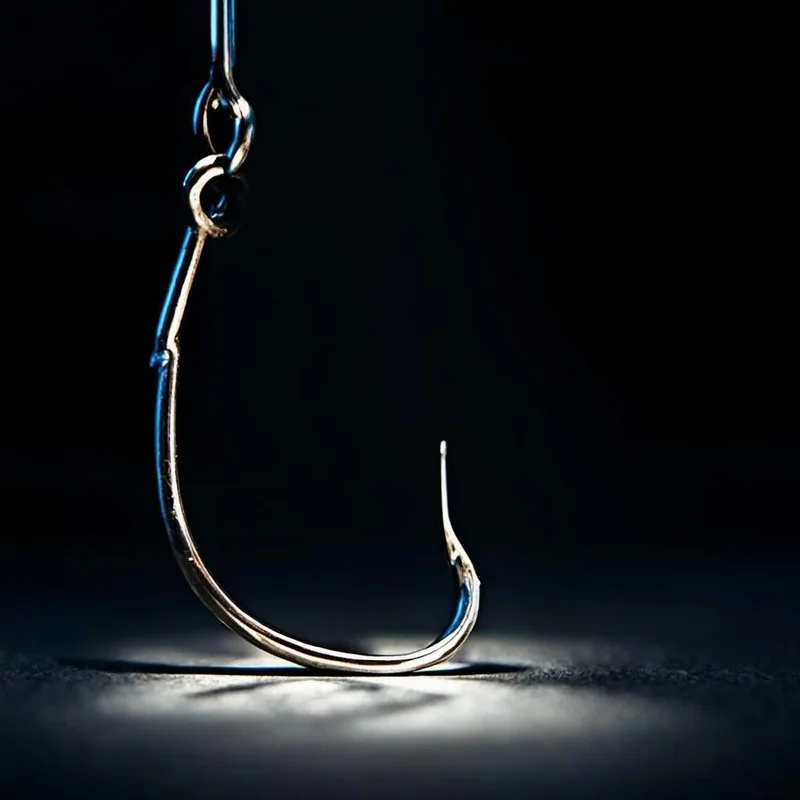
Coating Visual Reference
Common Questions
Which coating is best for saltwater?
HI-TECH Chemical Coated is the strongest performer in saltwater — 500h+ to first red rust under ASTM B117 salt spray testing. The multi-layer fluoropolymer barrier resists salt fog, UV, and repeated casting abrasion. For a budget-conscious saltwater option, Black Nickel (300h) is suitable for inshore species where hooks are replaced frequently. Nickel (200h) can work in brackish or estuarine conditions but will pit in full-salinity water over extended immersion.
Is HI-TECH Chemical Coated REACH compliant?
Yes. All five coating technologies — HI-TECH Chemical Coated, Black Nickel, 24K Gold, Bright Tin, and Nickel — are REACH compliant for EU import. The PTFE used in our enhanced coatings contains no PFOA or PFOS. Compliance documentation is available on request with every production order.
Can I order hooks with no coating?
Yes. Uncoated (bare) hooks are available on request. These are typically used by brands that apply their own coatings in-house, or for freshwater applications where corrosion resistance is not a priority. Bare hooks will develop surface rust within hours of saltwater exposure — they are not recommended for marine use without further treatment. MOQ and lead times are the same as coated hooks.
Does coating affect hook sharpness?
No. Coatings are applied after the hook point is ground and chemically sharpened. The coating layer is microns thick — it does not dull the point geometry. In the case of PTFE-enhanced coatings, the reduced surface friction can marginally improve penetration. All hook points are inspected post-coating under 10× magnification as part of standard QC.
Need a coating recommendation?
Specify target species and water type. A coating recommendation follows within 24 hours. MOQ from 500 pcs.
Request Samples