Corner-of-Mouth Hookset Design
Inward bend angle of 8–12° relative to the shank. The point rides along the jaw until it reaches the corner — then rotates and locks. No striking required: steady pressure is enough. Standard in conservation-mandated fisheries and European carp waters.
Default coating: Bright Tin — 150h ASTM B117. All five coating technologies available on request.
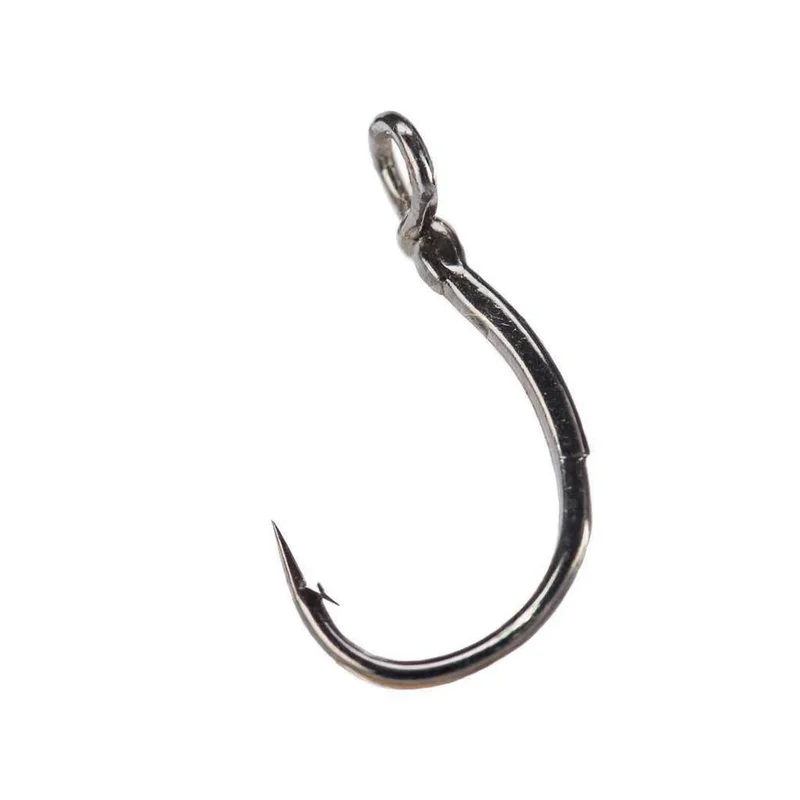
High-carbon steel, 75-85HRC
#10 – 10/0
8–12° inward
Product Line
| Model | Eye | Wire Gauge | Gap Width | Sizes | Best For |
|---|---|---|---|---|---|
| 9999 | Straight Eye | Standard (0.45–1.2 mm Ø) | Wide | #10 – 5/0 | Carp, pike, general freshwater |
| 9998 | Ringed Eye | Heavy (0.65–1.6 mm Ø) | Medium-wide | #4 – 8/0 | Catfish, sea bass, heavy carp |
| Killer | Straight Eye | Extra Heavy (1.0–2.2 mm Ø) | Wide | #2 – 10/0 | Tuna, shark, billfish, heavy saltwater |
Why Circle Hooks Hook the Corner
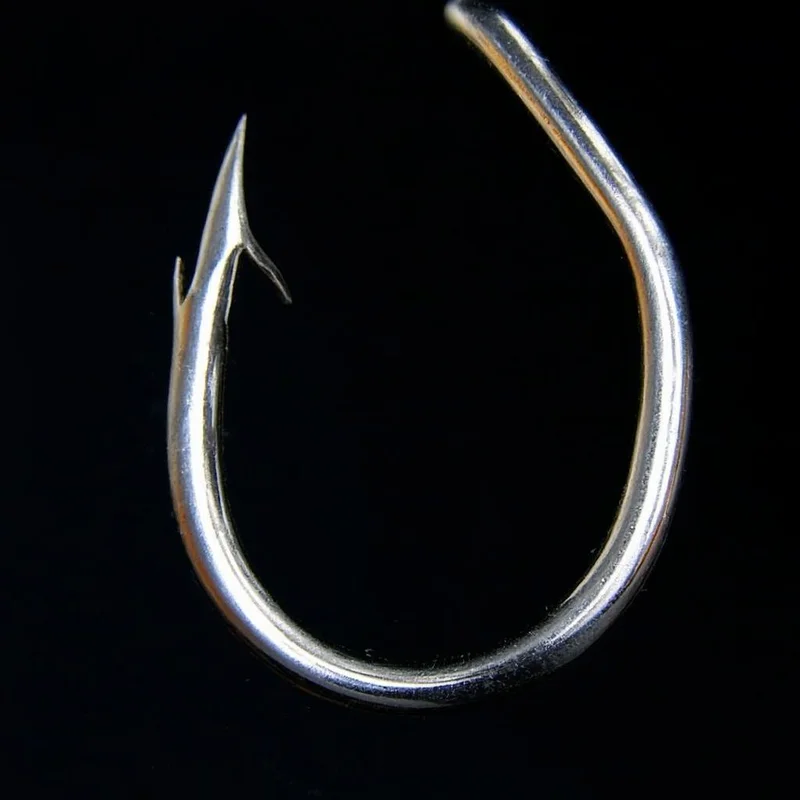
Inward-Bent Point — 8–12° Geometry
The point tip is bent inward at 8–12° relative to the shank axis. When a fish takes the bait and moves away, the hook slides forward inside the mouth — the point cannot engage tissue until it reaches the jaw corner, where the bend geometry causes the hook to rotate and set. Unlike J-hooks, the angler does not strike: steady rod pressure or the fish's own movement completes the hookset.
- ▸ 8–12° inward point angle — rides tissue without snagging
- ▸ Rotation at jaw corner sets the hook without striking
- ▸ Reported >90% corner-of-mouth placement in catch-and-release studies
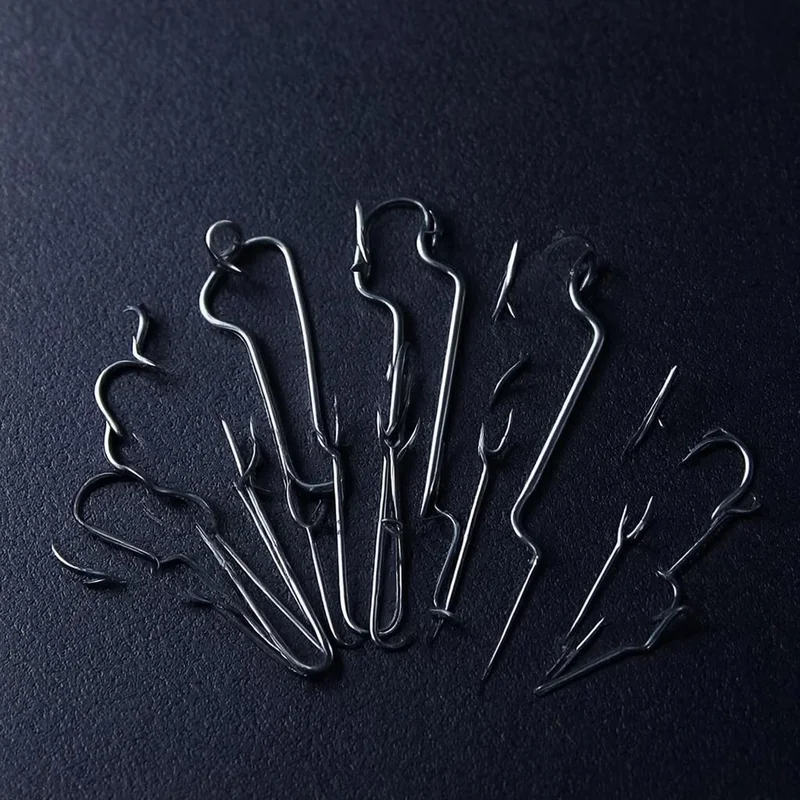
Three Wire Gauges — One Geometry
All three models use the same circle hook geometry — inward-bent point, wide gape — but scale the wire diameter and overall dimensions. 9999 uses standard-gauge wire for freshwater species. 9998 steps up to a thicker wire with a ringed eye for freer-running rigs and stronger fish. Killer Hook uses extra-heavy wire for large pelagic species where hook straightening is a risk.
- ▸ 9999 — 0.45–1.2 mm wire, general freshwater and light salt
- ▸ 9998 — 0.65–1.6 mm wire, ringed eye for running rigs
- ▸ Killer — 1.0–2.2 mm wire, straight eye, large pelagic species
Micro Barb & Barbless Options
Micro barb standard on all circle models — reduced barb profile releases faster while keeping bait and fish on during the fight. Barbless variants available for waters with total barbless rules. Both options maintain the same 8–12° inward bend geometry.
- ▸ Micro barb — holds bait during cast, easy hook removal
- ▸ Barbless — for venues with mandatory barbless rules
- ▸ All coatings REACH compliant for EU import
Product Images
Common Questions
How do circle hooks reduce deep hooking?
Which circle hook size for European carp?
What's the difference between 9999 and 9998?
Do I need to strike with circle hooks?
Circle Hooks — Start a Project
Custom sizes from #10 to 10/0. Private label packaging. MOQ from 500 pcs per pattern.
Request Samples