Carp Fishing Luggage OEM: Rod Holdalls, Carryalls, and Tackle Bags - What European Distributors Need on the Spec Sheet
Table of Contents
- What's the Difference Between a Holdall, a Carryall, and a Rucksack - and Which One Sells?
- Fabric Weight Isn't Everything: It's What's Behind the Fabric That Counts
- Zippers: The Part That Fails First
- Padding Density and Internal Dividers: The Part Your Customer Feels Every Time
- Carryall Internal Organization: The Spec That Determines Whether It Sells
- Rod Holdall Sizing: One Size Does Not Fit Europe
- The OEM Process: Lead Times, MOQs, and What to Ask Before You Pay
- Private Label Branding: Embroidery, Silicone, or Print?
- Why Luggage Is a Better OEM Category Than Most Distributors Realize
- Putting Together Your First Luggage OEM Order
Last month a German distributor walked through our factory with a competitor's rod holdall slung over his shoulder. He'd been selling it for two seasons. He unzipped the main compartment, pulled out the internal divider, and showed me the stitching, six inches of it had come undone, the foam padding was compressed to half its original thickness, and the base fabric showed through where the 600D outer layer had worn down to the backing mesh.
"You see this?" he said. "I sold 800 of these. Every single one came back with the same failure."
He wasn't angry. He was practical. He knew the problem was in the spec sheet, not the factory. Someone had approved a 600D outer with single-stitched seams and a 4mm foam divider. That combination lasts one season on a gravel bank in Saxony. Two if the angler is careful. Zero if he isn't.
That's what this guide is about. Not "what to stock." What to specify.
What's the Difference Between a Holdall, a Carryall, and a Rucksack - and Which One Sells?
If you're building a private-label luggage range, the first decision isn't fabric or color. It's which bag types your market actually buys.
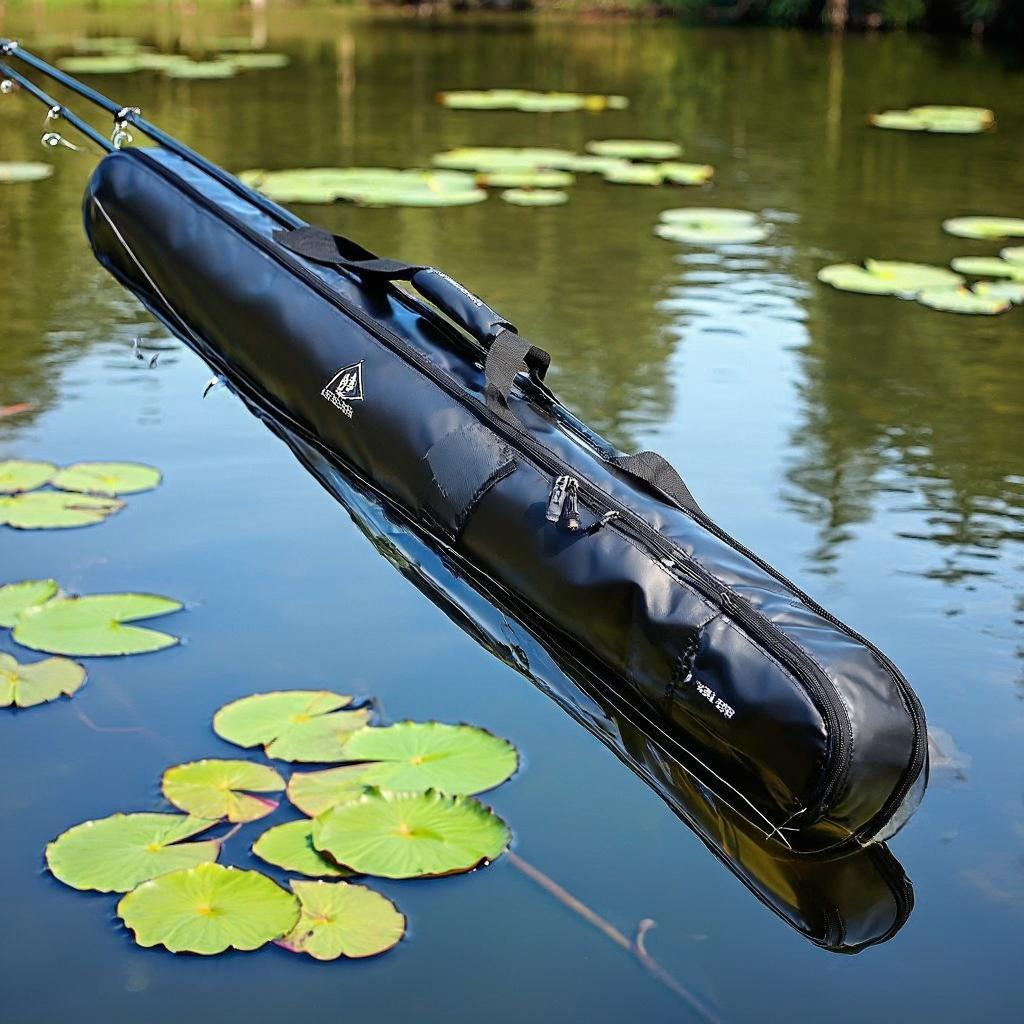
A rod holdall carries made-up rods, typically 2 to 4 rods with reels attached. Your customers want padded internal dividers, external pockets for banksticks and buzz bars, and a length that fits 12ft two-piece rods (roughly 190-195cm internal). The standard is a 4-rod holdall. Anything smaller is a niche product.
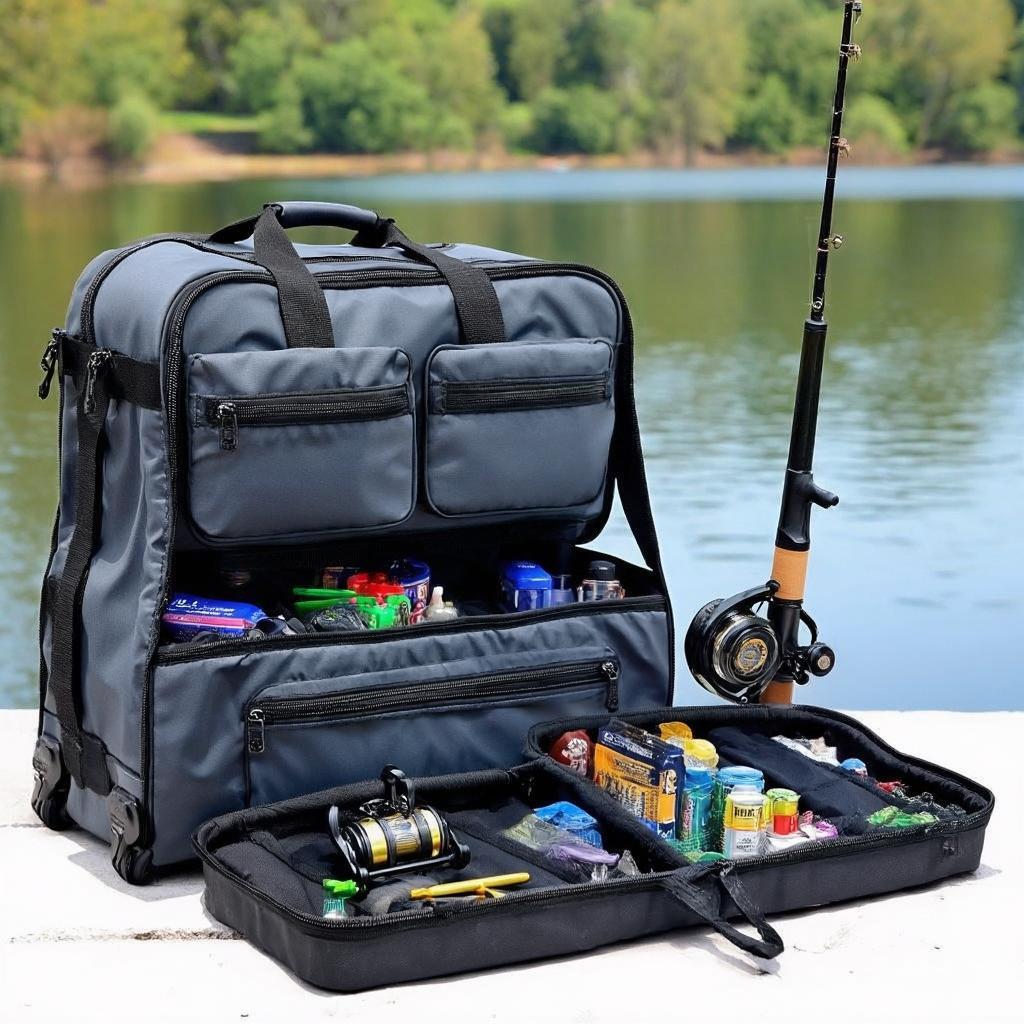
A carryall is the session bag, the one that holds everything else. Bait, food, spare clothing, terminal tackle boxes, a stove, maybe a sleeping bag in the colder months. Sizes start around 60 liters, with the 80-100L range being the most common for European carp anglers. The key feature isn't capacity. It's internal organization. Without proper dividers and pockets, the carryall becomes a black hole.
A rucksack is the mobile option: shorter sessions, roving, or when the angler needs to move swims multiple times in a day. 30-50L, with a structured back panel and waist strap. This is the growth category. More European anglers are fishing shorter sessions and moving more.
One German customer told us his ratio was roughly 40% holdalls, 35% carryalls, 25% rucksacks in a typical season. That varies by country. UK distributors move more holdalls. Eastern European markets lean toward carryalls. Ask your customers what they're actually selling before you place a bulk order.
Fabric Weight Isn't Everything: It's What's Behind the Fabric That Counts
The spec sheet will say "600D polyester." Fine. But 600D from which mill? With what coating? Backed with what?
I've seen 600D fabric that tears at 15kg of pull force and 600D from a different mill that handles 35kg. The difference isn't the denier. It's the weave density, the yarn quality, and what's laminated to the back.
Here's what actually matters for each bag type:
| Bag Type | Outer Fabric | Backing | Why |
|---|---|---|---|
| Rod Holdall | 600D polyester minimum, 900D recommended for premium | PVC or PU coating on the back face | Rods + reels weigh 8-12kg loaded. The base of the bag drags on gravel. The coating stops moisture wicking up from wet ground. |
| Carryall (80L+) | 600D polyester with ripstop weave | PU coating 2-pass | A loaded carryall hits 18-25kg. Single-pass coating delaminates at the stress points: corners, strap anchors, base panel. |
| Rucksack | 420D ripstop with 600D base panel | PU coating | Weight matters for roving anglers. 420D cuts 300-400g off the bag weight vs 600D, but the base panel needs the heavier fabric. |
One spec that gets overlooked: the backing fabric. The outer layer is what the customer sees. The backing is what stops the bag from turning into a sponge after a night on wet grass. Specify a 210D polyester backing with a PU coating pass on every bag whose base touches the ground. Skip this and you'll have customers wondering why their "waterproof" holdall soaked through from underneath.
Zippers: The Part That Fails First
I've lost count of how many bags I've seen returned because the zipper gave out. It's never the fabric that fails first. It's the zipper, specifically the main compartment zipper on a rod holdall, which gets opened and closed maybe 50 times a season, usually with cold, wet hands, often with mud in the teeth.
The spec sheet choice is simple:
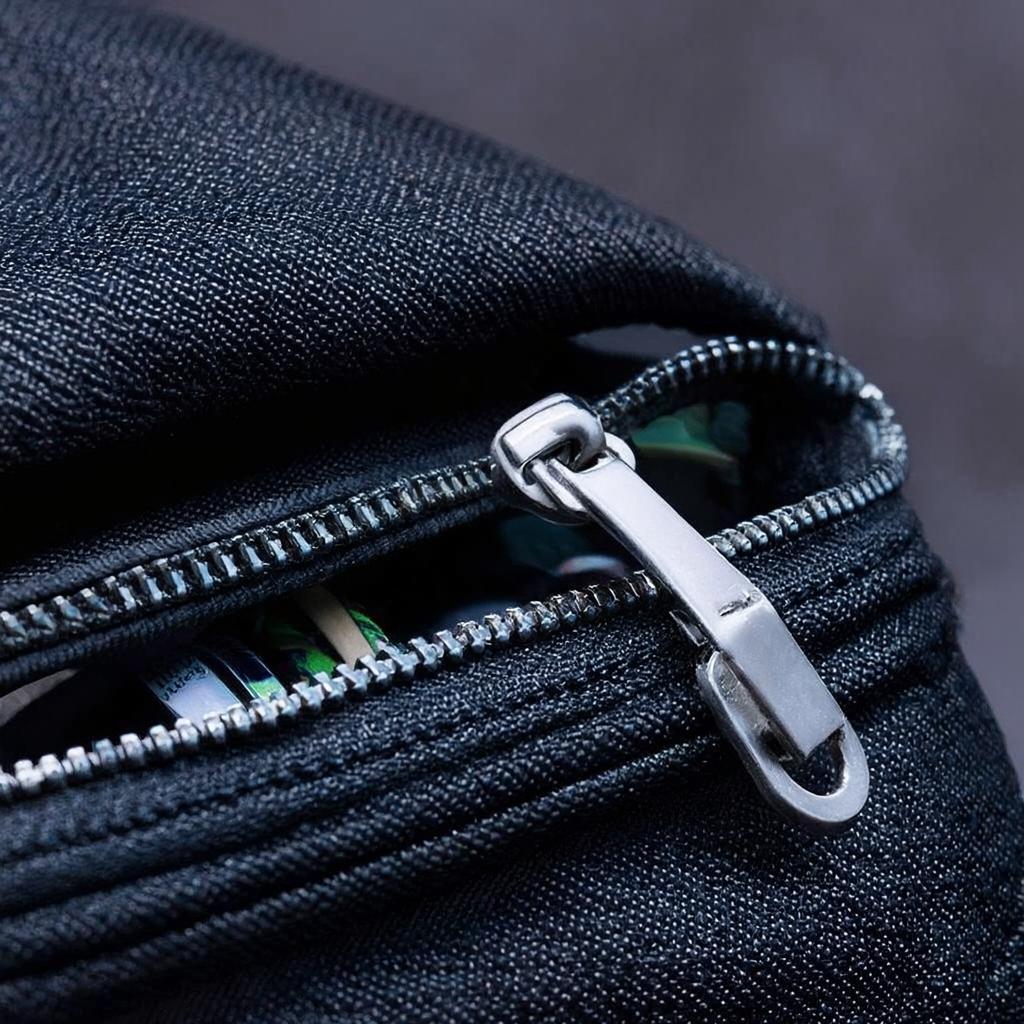
#10 zipper (YKK or equivalent quality) for the main compartment. This is a 10mm coil zipper. It handles the torque of a loaded bag being yanked open quickly. Anything smaller, a #8 or #5, will fail at the stress point where the zipper meets the bag corner.
#8 zipper for external pockets. Acceptable here because the load on pocket zippers is lighter and distributed differently.
Double slider on the main compartment. This lets the angler open the bag from either end, which matters when only half the bag is accessible in a tight bivvy.
The cost difference at factory gate between a #10 YKK main zipper and a generic #8: roughly $0.60-0.80 per bag. On a 500-unit order, that's $300-400. Compare that to the cost of 15 returned bags from customers whose zippers split in month three. The math isn't close.
Ask the factory to send a photo of the zipper pull with a ruler next to it during pre-production sampling. A #10 zipper head is visibly chunkier than a #8. It takes five seconds to verify and catches one of the most common bait-and-switch moves in luggage OEM.
Padding Density and Internal Dividers: The Part Your Customer Feels Every Time
A rod holdall's job is to stop 12ft carbon-fiber rods from snapping when the bag gets dropped onto concrete. That requires two things: a stiff outer shell and foam that doesn't collapse under repeated impact.
The industry standard for holdall padding is PE foam at 28-32 kg/m3 density, minimum 10mm thickness on the side panels and 15mm on the base. Anything below 25 kg/m3 feels plush in the showroom but compresses to half-thickness within a season. Most complaints about "the bag doesn't protect my rods" aren't about the fabric. They're about foam that flattened after six trips.
Internal dividers matter just as much. Three common configurations:
Velcro dividers: Cheapest, most common, least reliable. The velcro loses grip after 100+ cycles and the divider flaps around inside the bag. Fine for entry-level, avoid for mid-tier and above.
Zippered dividers: Better. The divider stays in place. Adds roughly $1.20 per divider at factory cost.
Padded sleeves: Best. Individual padded compartments for each rod, like a laptop sleeve but longer. Adds $2.50-3.00 per sleeve. This is what premium brands like Trakker and Fox use.
For a distributor's private-label range, my recommendation: zippered dividers for the volume SKU (covers 80% of your customers), padded sleeves for the premium SKU (covers the 20% who'll pay 20 GBP more for better protection).
Carryall Internal Organization: The Spec That Determines Whether It Sells
A carryall without internal organization is a laundry bag. Your customer unzips it, sees one cavernous black hole, and puts it back on the shelf.
The minimum viable carryall layout:
One main compartment with a drawstring top under the lid. The drawstring keeps rain out when the lid isn't fully closed, which is always, because anglers are fishing, not packing.
Two external side pockets, each large enough for a standard 3L bait tub. Mesh on one side for wet items (water bottle, wet net), solid fabric on the other for dry items.
One front pocket with internal organizers: elastic loops for banksticks, a zippered mesh pocket for terminal tackle boxes, a key clip.
Internal base reinforcement: A rigid PE board in the base, not just fabric. Without it, the carryall sags like a deflated balloon when loaded. Cost: about $0.40 per bag.
The best-selling carryall configuration we've seen from European distributors: 80L main, two side pockets, one front organizer, rigid base, 600D ripstop outer with PU backing, #10 zipper. MOQ 300 units. FOB roughly $22-26 per unit depending on logo complexity and packaging requirements.
For more on how carryall and holdall specs fit into a complete procurement programme, our carp barrow wholesale checklist covers the transport side of the gear equation.
Rod Holdall Sizing: One Size Does Not Fit Europe
A rod holdall that fits 12ft UK-style three-piece rods will be too short for 12ft two-piece rods used in Germany and France. The difference is about 30cm internal length.
The safe spec: internal length 195cm minimum, which covers 12ft two-piece rods with reels attached. If your market is exclusively UK, 180cm works for three-piece rods. But most European distributors sell across borders, and a bag that doesn't fit the customer's rods is the fastest way to a return.
Other sizing details that go wrong:
External pocket depth: 25-30cm minimum. Shallower pockets can't hold a standard buzz bar or bankstick set.
Shoulder strap padding: 15mm foam minimum, 50mm width. Narrower straps dig into the shoulder when the bag is loaded with four rods.
Carry handle: Double-stitched with a rubber grip sleeve. Single-stitched handles tear at 400-500 cycles in our testing. The rubber sleeve costs roughly $0.15 per bag.
The OEM Process: Lead Times, MOQs, and What to Ask Before You Pay
Standard lead time for a custom luggage order from a Chinese factory: 45-55 days from deposit to FOB. That assumes your logo artwork is approved, your color choices are confirmed, and the factory isn't backlogged with other orders. Add 10-15 days for pre-production sampling if you're doing a new design from scratch.
MOQs vary by bag type and factory:
| Bag Type | Typical MOQ | Per-color MOQ | Sample Cost |
|---|---|---|---|
| Rod Holdall | 300 units | 100 units | $50-80 |
| Carryall (80L) | 300 units | 100 units | $50-80 |
| Rucksack | 500 units | 150 units | $60-90 |
These MOQs are for full custom: your logo, your colorways, your spec choices. If you're doing a stock design with just a logo added (silk screen or embroidery), MOQ drops to 200 units on holdalls and carryalls.
Five questions to ask before placing the deposit:
1. "Send a photo of the zipper with a ruler." Verifies #10 vs #8 before production starts.
2. "What's the foam density spec, and can you send a cross-section photo?" Verifies the 28-32 kg/m3 foam isn't being swapped for 22 kg/m3.
3. "How many stitch lines on the shoulder strap anchor?" Two rows minimum. Single-row fails under load.
4. "What's the AQL level for final inspection?" AQL 2.5 is standard. AQL 1.5 is better for premium lines. Anything above 4.0 means you're accepting a significant defect rate.
5. "Send the base reinforcement board spec." Confirms the PE board exists and isn't being substituted with cardboard.
Private Label Branding: Embroidery, Silicone, or Print?
Your logo goes where your customer's customer sees it. That means the holdall's outer face, the carryall's front pocket flap, the rucksack's back panel.
Three branding methods at three price points:
Embroidery: Best quality, most durable. Works on 600D and heavier fabrics. Requires a digitized logo file (.dst or .emb). Cost: $0.80-1.50 per location depending on stitch count. Lead time for digitizing: 2-3 days.
Silicone patch: Premium look, 3D texture. Sewn or heat-pressed onto the bag. Cost: $0.40-0.70 per patch plus attachment labor. Needs a mold ($80-120 one-time). The mold cost breaks even around 300 units.
Screen print: Lowest cost per unit ($0.15-0.30), fastest turnaround. Fades after 2-3 seasons of UV exposure and rain. Fine for entry-level SKUs; avoid for anything positioned as premium.
Most European distributors we work with do a mix: silicone patch on the premium line (holdalls and rucksacks), screen print on the volume carryall. The patch signals quality at retail. The print keeps the cost down on the high-volume SKU.
One thing to watch: dark-colored bags (camo, olive, black) need a contrast logo. Embroidering black thread on black 600D is invisible from two meters away. White, silver, or fluorescent green embroidery on dark fabric reads clearly on the bank, which is where your brand gets photographed and shared.
For a broader view on how branding and material standards cascade across product categories, our weigh sling procurement guide covers similar spec decisions for fish care products.
Why Luggage Is a Better OEM Category Than Most Distributors Realize
Fishing luggage has three characteristics that make it unusually good for private label:
First, it doesn't break the way hard goods do. A chair leg snaps and the customer wants a refund. A zipper sticks and the customer lubes it and moves on. The failure modes are softer, the return rate is lower, and your customer service load is smaller.
Second, the brand is visible every session. A rod holdall sits on the bank for 48 hours straight, logo facing the swim. That's thousands of impressions per bag per season. Compare that to a rig wallet that lives inside a carryall: zero visibility.
Third, repeat purchase cycles are short. A hard-fishing angler replaces their carryall every 3-4 seasons and a holdall every 4-5. The bag gets wet, muddy, torn, faded. Unlike a chair or a bivvy, luggage gets beaten up visibly and replaced regularly. That means repeat orders for you.
Putting Together Your First Luggage OEM Order
If you're ordering from a Chinese factory for the first time, start with two SKUs: one holdall and one carryall. This gives you a product to test on the bank and a product to test in the shop. Three SKUs is too many for a first order. You'll spread your MOQ too thin and end up with inventory you can't move.
A realistic first order:
150 units 4-rod holdall (your primary market size), 600D ripstop, #10 YKK main zipper, zippered dividers, silicone logo patch
150 units 80L carryall, 600D ripstop with PU backing, #10 zipper, two side pockets, front organizer, rigid base, screen-printed logo
FOB estimate: $22-28 per holdall, $18-24 per carryall
Total order: 300 units, roughly $6,000-7,800 FOB
Container: Less than half a 20ft, consolidate with other product or ship LCL
This is the kind of order that builds a brand without breaking the cash flow. Twelve months later, when the first batch has sold through and you know which sizes move fastest, you add the rucksack and double the holdall volume.
The factory doesn't care if you're small on your first order. They care if you're serious. A detailed spec sheet, a clear pre-production sample request, and payment on time. That's what signals a buyer worth working with. Everything else is noise.
Building Your Own Luggage Brand?
We've been stitching holdalls and carryalls on the factory floor for over 15 years. If you're planning your first OEM luggage order, need a spec review of your current PO, or want a second opinion on factory quotes, get in touch.
Contact Us About OEM Luggage