Table of Contents
The Frame Is Not the Place to Save Money
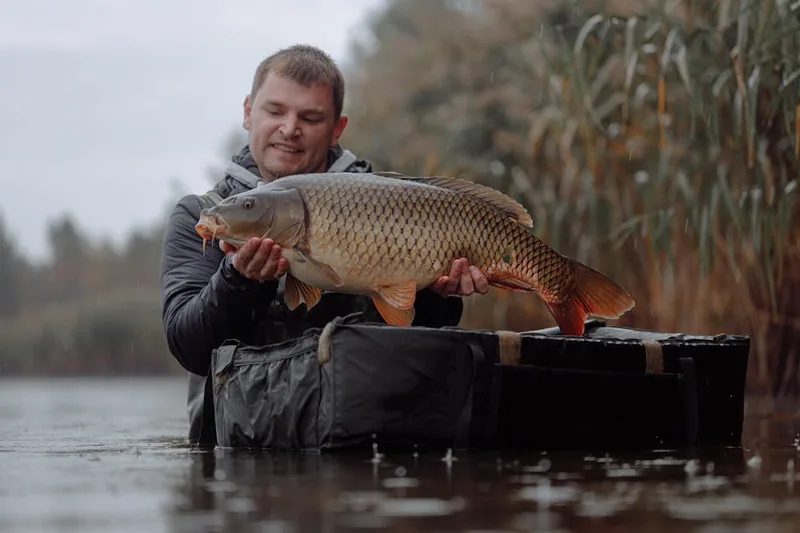
Walk through any carp fishing trade show in Europe and you'll see a dozen barrows that look nearly identical from five metres away. They all have a frame, two handles, and a bag. The differences that matter are invisible at that distance.
The frame material and tube diameter determine whether a barrow lasts three seasons or three years. Most entry-level OEM barrows use 22mm steel tubing with a basic powder coat. This is fine for the UK market at the £80-120 retail point. But if you're stocking for Scandinavia or the Alps , where barrows get dragged through mud, snow, and road salt in winter car parks , 25mm aluminum with anodized finish is the minimum viable spec.
Steel frames weigh about 50% more than aluminum equivalents. A steel two-wheel barrow runs 18-22 kg empty. The same design in aluminum drops to 12-15 kg. That weight difference is the first thing your customer notices at 5:30 AM on a Sunday when they're pushing 40 kg of gear across a field. But aluminum costs roughly 2.5x more at the factory gate. The margin math depends entirely on what your customers will pay for.
What to write in your PO: Specify tube diameter, wall thickness, and finish. "Aluminum frame" isn't enough , you want "25mm 6061 aluminum, 1.5mm wall, anodized." The tube wall thickness is where factories cut corners. A 1.2mm wall looks identical to 1.5mm on the finished product but fails 30% sooner under load.
One Wheel, Two Wheels, Three: The Geometry of Getting There
The wheel configuration is the single biggest product decision you'll make , and it's almost entirely driven by the terrain your customers fish on.
Single-wheel barrows dominate the UK market because they navigate narrow peg paths and stiles. The single wheel tracks through gaps that a two-wheeler can't. But single-wheelers put all the weight on one axle bearing and require the user to balance the load laterally. On flat Dutch or Belgian canal banks, a two-wheeler is simply more practical.
Three-wheel configurations , two main wheels plus a front caster , are growing in popularity among continental European distributors. The front caster takes about 15% of the load weight off the operator's arms on long pushes. The trade-off is complexity: three wheels mean three bearings that can fail, and the caster mechanism adds £8-12 to the factory cost.
Procurement rule of thumb: Stock single-wheelers at 50-60% of your barrow SKU count for the UK market, two-wheelers at 30-40% for European distribution, and test three-wheelers at 10% before committing volume.
Tyres, Bearings, and the Parts Nobody Checks
I've seen more warranty claims for barrow wheels than for frames. The wheel is the one component that touches the ground, and the ground is the enemy of everything.
Pneumatic tyres (air-filled) ride smoother and handle mud better than solid tyres. They also go flat. Every season, some percentage of your customers will show up to the lake with a flat tyre and no pump. Solid foam-filled tyres never go flat but transmit every bump directly to the frame , which accelerates weld fatigue.
The bearing specification matters more than the tyre. Sealed cartridge bearings (2RS) last years. Open bearings filled with factory grease last months. The cost difference is about £0.60 per wheel. Request sealed bearings in your spec sheet. If the factory can't tell you the bearing spec, they're using open bearings.
Also check the axle diameter. 12mm is standard for single-wheelers carrying up to 60 kg. For two-wheelers handling 80+ kg loads, specify 15mm. An undersized axle bends on the first kerb drop.
Bag Design: The Margin Play Inside the Margin Play
The barrow bag is where distributors make their real margin. A barrow frame has limited differentiation , tubes are tubes. But a bag can be anything: a simple open-top holdall, a zippered dry bag with internal pockets, a modular system with removable side panniers.
Basic single-compartment bags with a drawstring closure cost £4-7 at the factory. Multi-compartment bags with YKK zippers, internal rod sleeves, and waterproof lining run £15-22. The perceived value difference at retail is £30-60. That's where the margin lives.
Three bag specs that matter: (1) Fabric denier , 600D minimum for the base panel that sits against the frame, 420D acceptable for side panels. (2) Drainage grommets , two in the bottom, or your customer's gear sits in a puddle after rain. (3) Attachment system , Velcro straps wear out after about 18 months of daily use; buckle clips last longer but cost more.
If you're doing OEM with custom branding, the bag is where your logo goes. Embroidery on the bag flap costs £0.40-0.80 per unit and is visible in every photo your customer posts on social media.
MOQ Realities and Container Economics
Carp barrows are bulky. A fully assembled two-wheel barrow takes up roughly 0.15 cubic metres of container space. That means a 40-foot container holds about 350-400 units once packaging is added. Flat-pack designs that ship with the wheels removed can fit 500-550 in the same container, cutting your per-unit shipping cost by roughly 25%.
MOQ varies by factory and order complexity. Standard models from existing tooling: 100-150 units. Custom frame dimensions: 300+ units. Full OEM with custom bag, frame color, and branding: 500+ units, with 30% tooling deposit upfront.
Lead times: 35-45 days production for standard models, 50-65 days for custom. Add 25-35 days sea freight to European ports. Budget 90-100 days total from PO signing to warehouse receipt for a first-time OEM order.
What Most Buyers Get Wrong
After fifteen years of watching OEM barrow orders succeed and fail, here are the three most expensive mistakes I see B2B buyers make:
Mistake one: Specifying everything except the welds. A barrow frame has 20-30 weld points. Each one is a potential failure. Specify MIG welding (not spot welding) for load-bearing joints. Request weld penetration photos from the first production run. A weld that looks fine from the outside can be hollow inside.
Mistake two: Ordering without a pre-production sample. A CAD drawing and a photograph are not the same thing as a barrow you can push across a field. Always order one pre-production sample , built on the actual production line, not hand-made by the sample room , before committing to 500 units. The sample costs £100-200 including courier shipping. That's the cheapest insurance you'll ever buy.
Mistake three: Forgetting the spare parts program. Wheels wear out. Bearings fail. Hand grips tear. If you're selling barrows to retailers, you need to offer spare parts. Budget 3-5% of your order quantity for spare wheels, bearing kits, and handle grips. Pack them in a separate carton inside the container. Your retailers will thank you, and your return rate will drop measurably.
Ready to Source Carp Barrows for the 2026–27 Season?
Contact us for current FOB pricing, MOQ, and lead times on single-wheel, two-wheel, and powered barrow options, with full custom branding available.
Get in Touch