March last year. A distributor from the Netherlands called me on a Thursday afternoon. He'd wired a 30% deposit to a factory he found on a B2B platform — 200 carp fishing chairs, custom logo, competitive price. Six weeks later, the shipment arrived. Thirty-seven chairs had weld fractures at the leg joints. Another forty-two had foam that had already compressed to half its original thickness inside the carton.
He didn't need a new supplier. He needed to understand what he should have checked before sending that deposit. This guide is what I told him.
Table of Contents
- Factory vs Trading Company: Which One Actually Controls Your Order?
- The Spec Sheet: What Your Factory Quote Is Probably Missing
- MOQ Reality: What Factories Will Actually Accept
- FOB Pricing Tiers: What Drives Your Unit Cost
- The Five-Point Pre-Shipment Inspection Checklist
- Payment Terms That Protect Your Money
- Shipping, Lead Times, and What "30 Days" Really Means
Factory vs Trading Company: Which One Actually Controls Your Order?
The first question most buyers ask is "are you a factory or a trading company?" It's the wrong first question.
Here's what actually matters: who controls the production line? A direct factory in Zhejiang with 200 workers and their own welding stations can adjust wall thickness, change foam density, and fix a stitching pattern within hours. A trading company in Hangzhou with a glossy catalogue and five supplier partners cannot — they relay your request and hope the factory complies.
| Factor | Direct Factory | Trading Company |
|---|---|---|
| Price | Lowest unit cost | 5-15% markup |
| Production control | Direct access to line | Relies on factory compliance |
| MOQ flexibility | Higher minimums (100-300) | Can combine orders; lower per-SKU MOQ |
| Customisation depth | Full OEM: frame, fabric, foam | Usually limited to logo + colour |
| Communication | May require Mandarin speakers | English-speaking account manager |
For a standard folding carp chair with a logo print, a trading company works fine. For a chair with a proprietary frame geometry, custom foam density, and a unique powder coat colour, you want the factory floor — or a supply chain integrator who physically audits that floor before your order starts.
I've walked through factories in Cixi, Ningbo, and Qingdao. The ones with consistent quality share one trait: they measure things. Wall thickness gauges at every welding station. Foam density logs per batch. Stitch-per-centimetre counters on the sewing floor. If a supplier can't show you these, you're gambling.
The Spec Sheet: What Your Factory Quote Is Probably Missing
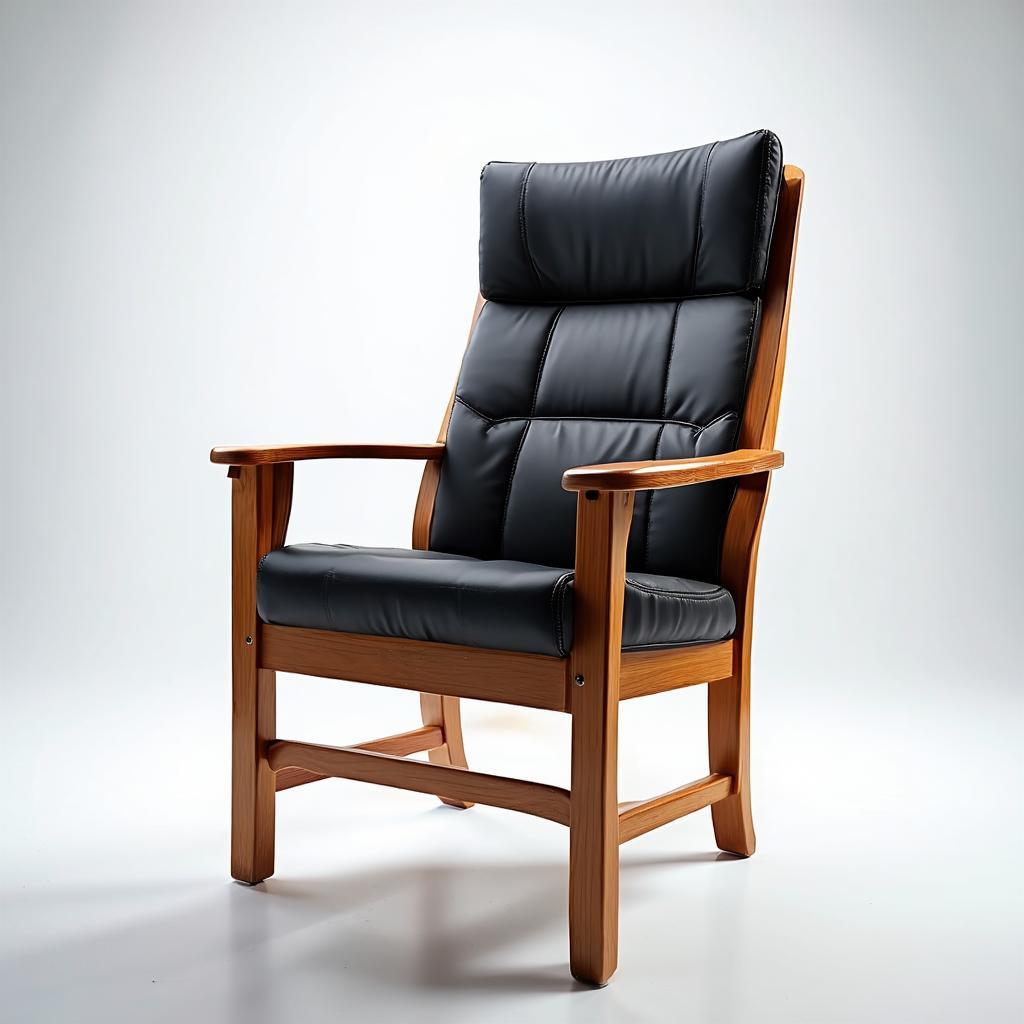
Most factory quotes for a carp fishing chair look like this: "Aluminium frame, 600D Oxford fabric, 150kg capacity, FOB Ningbo $22." That spec sheet tells you almost nothing. Here's what it should say:
Frame Material — The Grade Actually Matters
"Aluminium frame" could mean 6061 alloy (standard, 1.2mm wall) or 7005 alloy (stronger, lighter, 1.5mm wall). The difference: roughly $3.50 per chair at factory gate. The 7005 chair weighs about 400g less and handles repeated stress cycles better.
For a steel-frame chair: "steel" could be Q195 carbon steel with a 0.8mm wall, or Q235 with a 1.2mm wall and powder coating to salt-spray test standards. The second one lasts five seasons. The first one rusts in two.
Fabric — 600D Alone Is Not a Specification
"600D Oxford" is the most commonly quoted fabric on fishing chairs. But 600D describes only the yarn thickness — not the weave density, not the coating, not the weight. A proper fabric spec includes:
- Weave: 600D×600D (not 600D×300D — a common downgrade)
- Coating: PU (polyurethane) with UV treatment, minimum 2 passes
- Weight: Minimum 280 g/m² finished weight
- Colour fastness: Grade 4 minimum (ISO 105-B02)
A chair with 600D×300D fabric and single-pass coating costs the factory about £1.20 less per unit. It also delaminates after one season of sun exposure. Ask for the fabric spec sheet before you approve a sample.
Foam — Density, Not Thickness
The number-one warranty claim on carp fishing chairs is compressed foam. The factory will tell you "high-density foam." You need to hear a number: minimum 28 kg/m³ for seat padding, minimum 35 kg/m³ for armrests. Below that, the foam collapses within a season of regular use.
MOQ Reality: What Factories Will Actually Accept
Every B2B platform listing says "MOQ: 100 pieces." That number is a starting point for negotiation, not a hard rule. Here's what we see in practice:
| Order Type | Realistic MOQ | Unit Price Impact |
|---|---|---|
| Stock model, no customisation | 50-100 units | Standard FOB rate |
| Stock model + logo print | 100-200 units | +£0.50-1.00/unit |
| Custom colour (Pantone match) | 200-300 units | +£1.00-2.00/unit |
| Custom frame geometry | 300-500 units | +£3.00-5.00/unit + tooling |
| Full OEM (new design) | 500+ units | Tooling: £300-800 one-time |
The single most effective negotiating lever: mixed containers. If you need 50 chairs but also 100 sleeping bags and 80 bivvies, many factories will accept the combined volume as meeting their MOQ threshold. This is how smaller distributors build their first catalogue without overcommitting to a single SKU.
FOB Pricing Tiers: What Drives Your Unit Cost
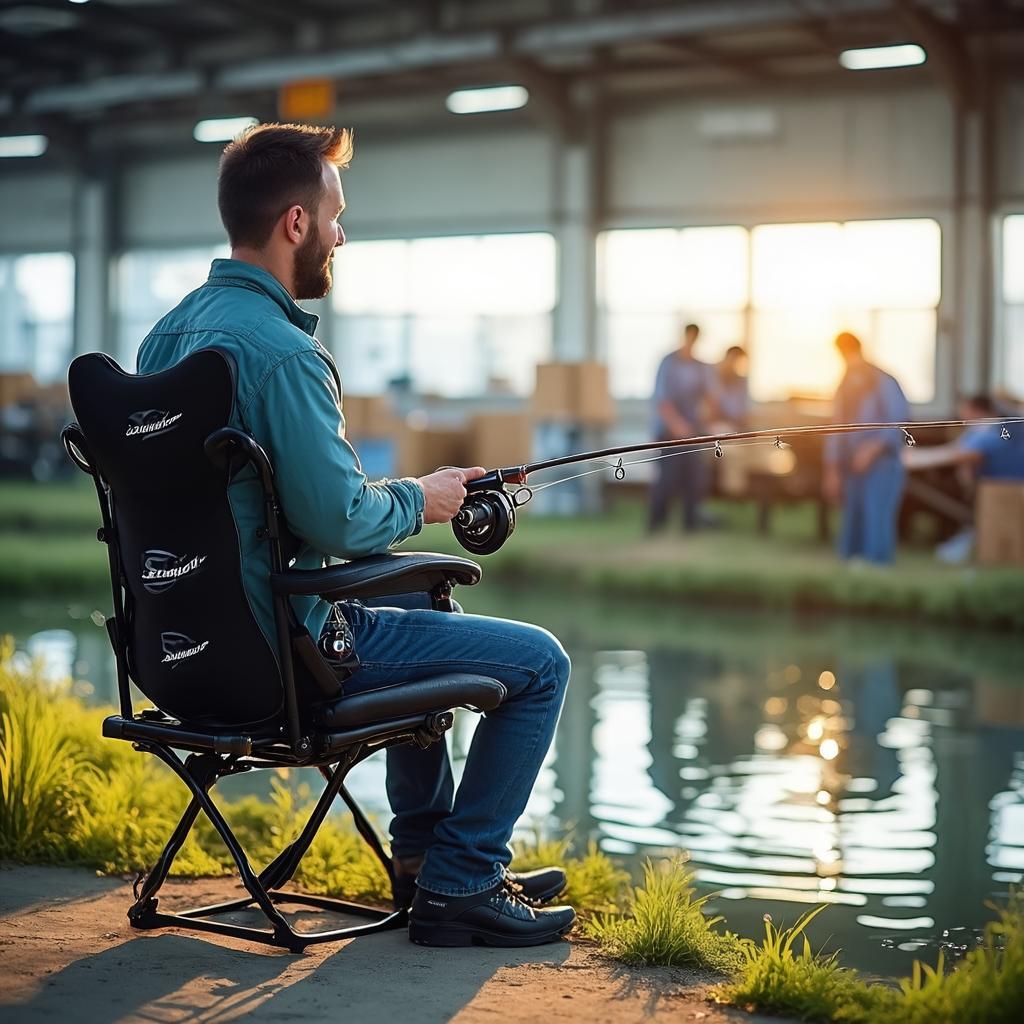
A standard folding carp fishing chair with 6061 aluminium frame, 600D Oxford fabric, and adjustable legs lands at roughly $18-28 FOB Ningbo/Shanghai at 200-unit quantity. The price spread comes from five variables:
- Frame alloy: 7005 adds ~$3-5/unit over 6061
- Leg system: Telescopic adjustable legs with anti-sink feet add ~$2-4/unit vs fixed square legs
- Armrests: Padded adjustable armrests add ~$3-6/unit vs no armrests
- Fabric tier: 600D×600D PU double-coated with UV treatment adds ~$1.50/unit over single-pass basic Oxford
- Volume: Every doubling of quantity drops unit cost by roughly 8-12%
The chair that retails at £79 in a UK tackle shop typically costs £18-22 FOB at 200 units. The chair that retails at £129 has a £28-35 FOB. The difference is not just branding — it's alloy grade, fabric spec, and foam density. Your customers feel it on the bank.
The Five-Point Pre-Shipment Inspection Checklist
If you do one thing differently after reading this guide, make it this: inspect before you ship. Not after the container arrives in Rotterdam. Here are the five checkpoints that catch 80% of the problems:
1. Weld penetration test. Pick 10 random chairs from the batch. Inspect every weld point — leg joints, backrest hinges, armrest brackets. A proper aluminium weld is smooth, even, and free of porosity. A cold weld looks lumpy and breaks under load. This is the number-one failure point.
2. Static load test. Place 150% of the rated capacity on the seat (so 225kg for a 150kg-rated chair) for 30 minutes. No frame deformation, no weld cracking, no leg splay. This isn't optional — it's what separates a chair that lasts five years from one that generates warranty claims in month two.
3. Foam compression test. Press the seat foam fully flat, hold for 10 seconds, release. It should recover to at least 90% of original thickness within 30 seconds. If it doesn't, the foam density is below 28 kg/m³ and your customers will be sitting on plywood by September.
4. Fabric seam strength. Pull-test at least three seams per chair — seat panel joins, backrest panel joins, armrest attachment points. Minimum 350N seam slip resistance. Stitch density should be 3-4 stitches per centimetre at stress points.
5. Folding mechanism cycle test. Open and close the chair 20 times. Listen for grinding. Feel for resistance changes. Check that locking pins engage fully every time. A mechanism that works smoothly on sample #1 but grinds on sample #15 indicates a tolerance stack-up problem in production.
Payment Terms That Protect Your Money
The standard payment structure in Chinese furniture manufacturing is 30% deposit, 70% against copy of Bill of Lading. This is normal. Anyone asking for 100% upfront is either desperate or dishonest — either way, walk away.
For new relationships, insist on:
- 30% T/T deposit to start production
- 70% T/T against scanned B/L copy (or against inspection report if you have a third-party inspector)
- Never release full payment before seeing proof of shipment
For orders above $10,000, consider a Letter of Credit (L/C) — it adds bank-level verification on both sides. The paperwork overhead is worth it when the order value justifies it.
Shipping, Lead Times, and What "30 Days" Really Means
Every factory promises 30 days. Here's what that timeline actually looks like when it works:
| Phase | Duration | Notes |
|---|---|---|
| Sample production and approval | 7-14 days | Add 7 days if custom tooling needed |
| Deposit clearance + material procurement | 5-10 days | Fabric dyeing adds 5 days |
| Production run | 25-35 days | Depends on line availability |
| QC inspection and rectification | 3-5 days | Add 5 days if rework needed |
| Sea freight to Rotterdam/Hamburg | 25-35 days | FCL; LCL adds 5-10 days |
| Total realistic timeline | 65-99 days | From deposit to EU port |
A factory that promises "30 days door to door" is telling you what you want to hear, not what will happen. Plan for 10-14 weeks from deposit to delivery. If it arrives in 9 weeks, you're happy. If you planned for 6 weeks and it takes 12, you've missed your selling season.
For European distributors, the carp fishing chairs in our product range ship from audited factories in Zhejiang and Shandong provinces. We handle the inspection, documentation, and logistics so you don't have to learn Mandarin to get a straight answer about wall thickness.
Ready to Source Carp Fishing Chairs Without the Guesswork?
We work with BSCI-audited factories, manage QC inspection on-site, and handle logistics from factory floor to your warehouse. Tell us your specs and we'll return MOQ, pricing, and lead times within one business day.
Get Your Custom Quote →Frequently Asked Questions
Request their business license (营业执照), ask for recent BSCI or ISO 9001 audit reports, and do a video call that shows their production floor — not just their showroom. A legitimate factory will show you welding stations, fabric cutting tables, and QC testing areas. If they only show a sample room, you're talking to a trading desk. Also check their export records: a factory that ships 5,000+ chairs per month has a track record you can verify through shipping documents.
For private label (your logo on a stock model): typically 100-200 units. For custom colours: 200-300 units. For a fully custom design with new frame tooling: 300-500 units, plus one-time tooling costs of £300-800. Many factories will negotiate lower MOQs on a first order if you demonstrate long-term potential. Mixed-container orders across multiple product categories are the most effective way to reduce per-SKU MOQ requirements.
At minimum: EN 581-2 (outdoor furniture safety standard) for the chair itself. For factory conditions: BSCI or SEDEX audit. For chemical compliance: REACH (EU) for any fabric treatments, foam, and plastic components. If the chair contains any wood elements, you'll also need FSC certification. A factory that already holds these certifications has been through the audit process and understands European market requirements — this saves you months of compliance work.
For orders above $15,000, yes — a factory visit is the single best investment you can make. You'll see the actual production conditions, meet the quality team, and inspect the raw materials on the floor. For smaller first orders, a video inspection combined with a third-party QC service (SGS, Bureau Veritas, or a local agent) is a practical alternative. At AnglinGear, we physically audit every factory in our network and provide inspection reports to our clients before shipment.