Fishing Chair OEM: The Specs Your Factory Quote Should Include (and the Ones It Won't)
Table of Contents
- What Does a Fishing Chair Actually Cost to Make?
- Steel or Aluminium: Which Frame Should Your PO Specify?
- What Should Your OEM Spec Checklist Include? (7 Things Factories Won't Volunteer)
- Which Fabric Specs Actually Matter for a Fishing Chair?
- What Goes Wrong at QC? How to Catch Failures Before the Container Leaves
- How Many Chairs Fit in a Container? (And Why It Matters for Your Margin)
- What's the One Question Smart Buyers Ask?
Last month, I was walking a Polish distributor through our welding station. He stopped at a batch of chair frames, picked one up, and ran his thumb along the leg-to-seat weld. Didn't say a word for about ten seconds.
Then he said: "I rejected 400 chairs from another factory last year because this exact weld popped on the third use."
He knew what he was looking at. Most buyers don't. They read "6061 aluminium frame" on a spec sheet and assume it's the same across factories. It's not. The aluminium grade, the wall thickness, the weld bead, the foam density under the seat. None of these make it onto a standard factory quote unless you demand them.
If you're sourcing OEM fishing chairs from China, the difference between a chair your customers reorder and one they return is about seven details on a purchase order. I'll walk through every one of them.
What Does a Fishing Chair Actually Cost to Make?
Let me give you real numbers from our production floor, May 2026.
A basic steel-frame carp fishing chair with 600D Oxford fabric, fixed legs, and standard foam padding: $6.50–9.00 per unit at 500+ MOQ, factory gate Shandong.
Upgrade to 6061 aluminium frame, you're at $12–16. Add adjustable legs with mud feet (Ø25mm tubing, 1.2mm wall), $16–22. Four-way adjustable legs with swivel mud feet and reinforced armrests, $22–30.
These ranges move with steel and aluminium prices, exchange rates, and seasonal production loads. But the hierarchy is stable because the cost drivers are physical: aluminium costs roughly 2.5× more than powder-coated steel per kilo of finished frame. More on that decision below.
Where factories cut cost isn't the frame material. That's too visible. They cut in three places you won't notice until the product hits the field.
First, the foam. A fishing chair seat pad should be 28–32 kg/m³ medium-density foam, 20mm minimum thickness. Cheap factories use 15–18 kg/m³. It feels fine in the showroom. After 40 hours of use it's compressed to 8mm and your customer is sitting on steel tube through fabric. Cost difference: about $0.80 per chair.
Second, the thread. Outdoor furniture stitching takes UV, moisture, and body weight cycling. Bonded polyester thread (Tex 70) holds. Nylon thread absorbs water, degrades under sunlight, and the seat seam splits in one season. Cost difference: about $0.25 per chair.
Third, the leg adjustment mechanism. Spring-loaded push buttons with 1.2mm spring steel and zinc coating survive 5,000+ extensions. 0.8mm uncoated spring steel loses tension after a few hundred. The chair still works. The leg just won't stay locked at the right height anymore. Annoying enough to lose a repeat customer.
Steel or Aluminium: Which Frame Should Your PO Specify?
Every fishing chair OEM order starts with this question. Here's the factory-floor comparison:
| Factor | Steel Frame | 6061 Aluminium Frame |
|---|---|---|
| Factory-gate cost | $6.50–9.00 (base chair) | $12–16 (base chair) |
| Weight per chair | 3.5–4.2 kg | 2.4–3.0 kg |
| Frame wall thickness | 0.8–1.0mm standard | 1.2–1.5mm recommended |
| Corrosion resistance | Requires powder coating; rusts at scratches | Natural oxide layer; no rust |
| Weld quality critical? | Moderate; steel forgives imperfect welds | High; aluminium cracks at bad welds |
| Lifespan under heavy use | 2–3 seasons before coating wear | 4–5+ seasons |
| 40HQ container capacity | ~1,400–1,600 chairs | ~1,800–2,000 chairs |
| Best for | Budget SKU, rental fleets, entry price point | Premium SKU, brand flagship, high-margin |
The aluminium chair costs more at the factory gate but ships lighter. In a 40HQ container from Qingdao to Rotterdam (roughly $3,500 sea freight, Q2 2026), the weight difference alone saves about $0.80 per chair in freight cost. The aluminium chair also commands a higher retail margin. Your €19.99 steel chair competes on price. Your €39.99 aluminium chair competes on brand and feel.
If you're running one SKU, run aluminium. The first impression. Picking the chair up. It sells. A 2.6kg chair versus a 4.0kg chair. Your customer notices in the first half-second.
For a deeper breakdown on what your end customers actually value, our fishing chair wholesale guide covers the retail-side decision framework.
What Should Your OEM Spec Checklist Include? (7 Things Factories Won't Volunteer)
Most distributor POs for fishing chairs read: "Fishing chair, green, logo on backrest." That's not a spec. That's a wish. Here's what a proper OEM fishing chair spec looks like, line by line.
1. Frame material and wall thickness. "6061 T6 aluminium alloy, main tube Ø25mm, wall thickness 1.2mm minimum." If steel: "Q235 powder-coated steel, main tube Ø22mm, wall thickness 1.0mm minimum, epoxy-polyester powder coat 60–80 micron." Do not accept "aluminium frame" without the alloy grade. 6061 is structural. 6063 is cheaper extrusion-grade aluminium and doesn't hold welds the same way.
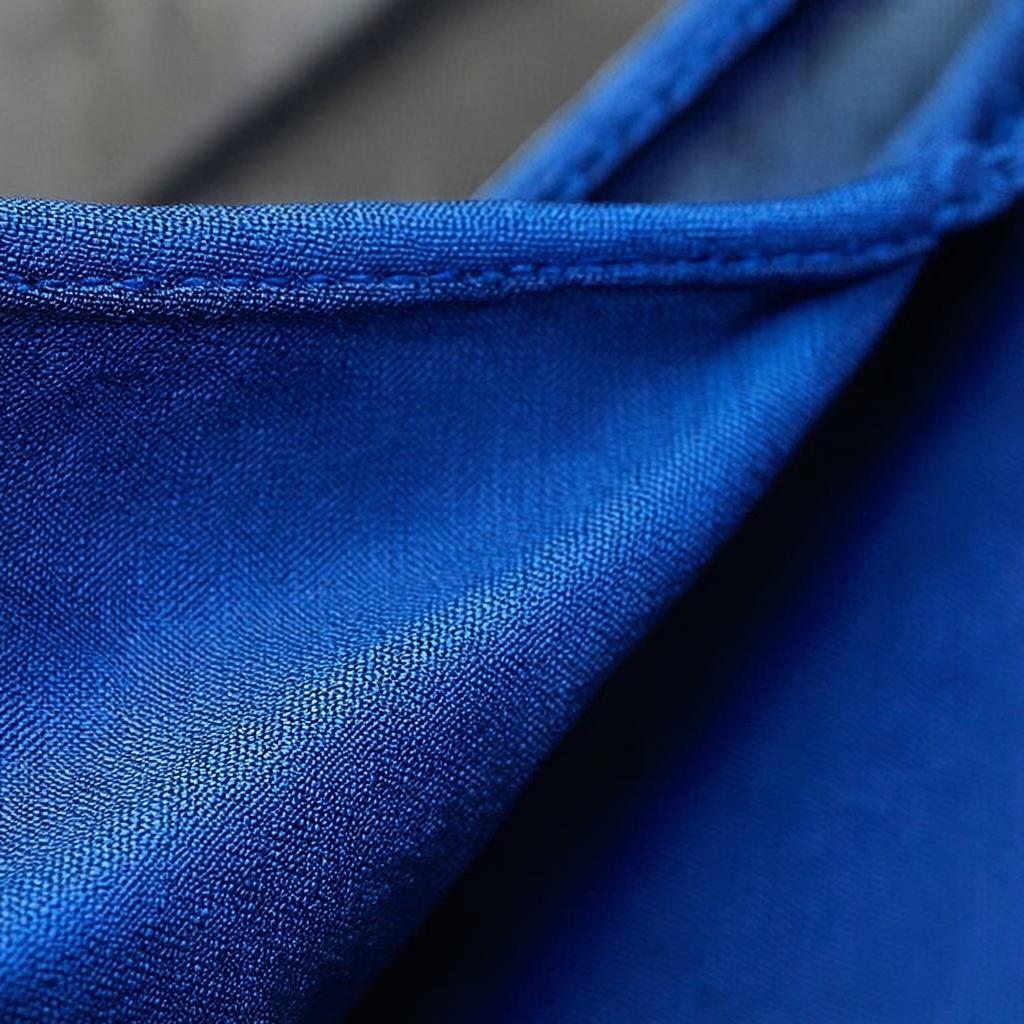
2. Fabric weight and backing. "600D Oxford polyester with PU backing, 210 g/m² minimum." 600D is the baseline for a chair that sees sun, rain, and body weight for 8-hour sessions. 210D is lighter and cheaper; fine for occasional use on calm days, not for commercial fishing. The PU backing isn't about waterproofing the fabric itself. It's about preventing the foam underneath from absorbing moisture. Without it, the seat pad moulds from the inside.
3. Foam density and coverage. "28 kg/m³ PE foam, 20mm thickness, full seat coverage with 10mm backrest coverage." Specify full coverage. Some factories pad the centre of the seat and leave the edges with 5mm thickness. Your customer feels the frame rail through the edge after two hours.
4. Leg adjustability spec. "Four legs, independently adjustable, push-button spring mechanism, 1.2mm spring steel, zinc-plated. Adjustment range: 32–45cm seat height. Swivel mud feet, Ø60mm minimum." The swivel mud foot is the detail that separates a chair that works on a sloped bank from one that doesn't. Fixed feet sink into soft ground at an angle. Swivel feet self-level.
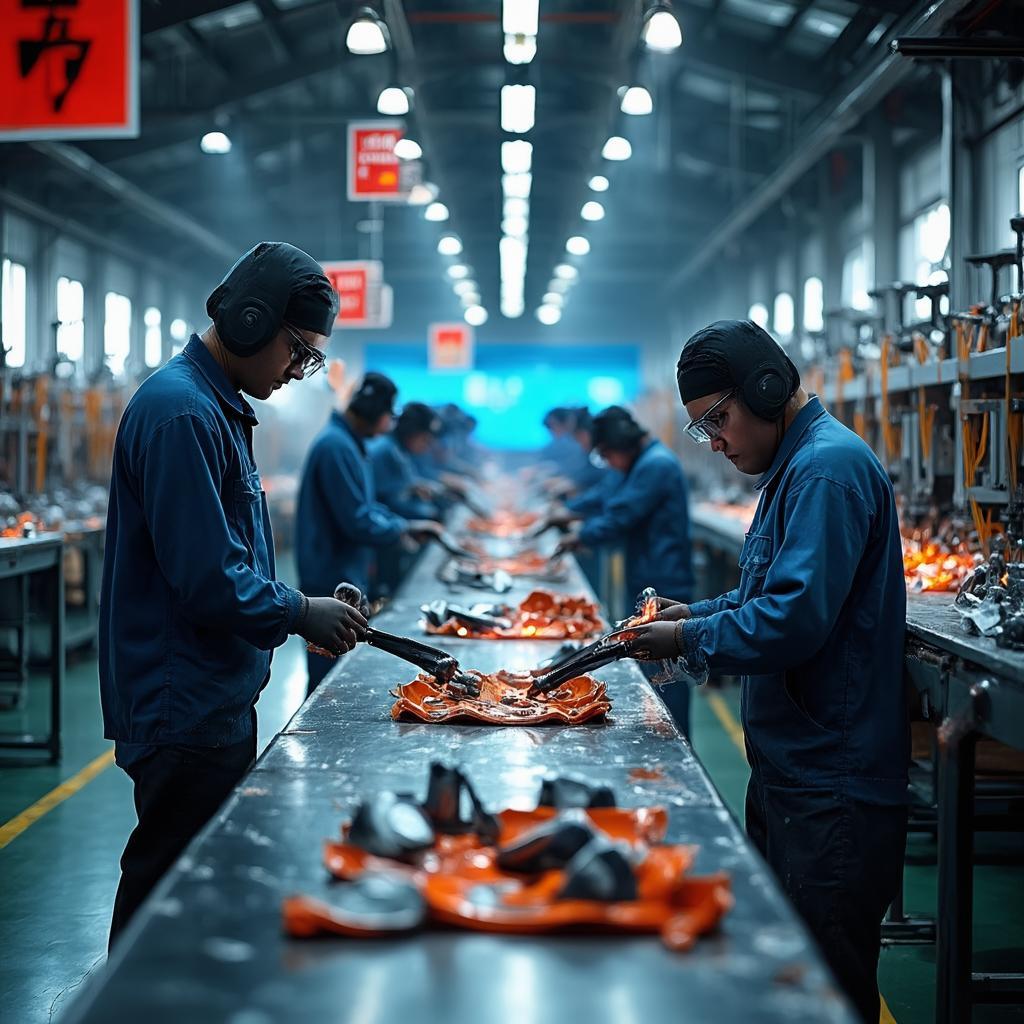
5. Welding standard. "All structural welds: TIG continuous bead, no tack welds, no post-weld grinding. Visual inspection: consistent bead width, no porosity, no undercut." TIG (tungsten inert gas) welding on aluminium produces a cleaner, stronger joint than MIG. Tack welds (three quick spots instead of a full bead) are faster, cheaper, and fail. Grinding hides bad welding. If the bead's been ground smooth, someone's hiding something.
6. Stitching specification. "All load-bearing seams: double-stitch, bonded polyester thread, Tex 70 minimum, 4 stitches per cm. Bar-tack reinforcement at armrest attachment points and seat-to-frame strap connections." The armrest attachment is the highest-stress stitch point on any fishing chair. When someone leans to one side to net a fish, that armrest takes their full upper body weight. Bar-tack it or expect returns.
7. Branding method and position. "Silkscreen logo, centre backrest, single colour, Pantone to be confirmed. Embroidery optional at +$0.80–1.20 per unit." Screen printing fades after two seasons of sun. Tell your customers that upfront, or they'll mistake it for a defect. Embroidery lasts the life of the fabric but is only viable on 600D or heavier; 210D puckers around the stitch holes.
Write every one of these into the PO, not into a WeChat message. The PO is enforceable. The WeChat message disappears three production runs later.
Which Fabric Specs Actually Matter for a Fishing Chair?
I see too many buyers obsess over frame material and ignore the fabric entirely. The frame holds the person. The fabric is what the person sits on for eight hours. Here's what differentiates:
600D Oxford with PU backing is the standard. But within 600D, the weave density varies. Cheap 600D uses 64T (threads per inch). Proper 600D uses 68T or higher. The difference: the 64T fabric develops pinhole wear points at the frame contact areas after one season. You can't see this on a new sample. You can specify minimum thread count in the PO.
Waterproof rating matters less for a chair than for a bivvy, but still matters. 600D with PU backing gives you roughly 800–1,000mm hydrostatic head. Enough for rain. Not enough for submersion. If your customers fish in the UK or Netherlands (rain every session), consider spec'ing an additional DWR (durable water repellent) treatment on the outer face. Adds roughly $0.40 per chair. Keeps the foam dry for two extra seasons.
For supply chain context on how fabric specs cascade through your product line, our carp care compliance guide covers material standards across the full range.
What Goes Wrong at QC? How to Catch Failures Before the Container Leaves
I've done enough final inspections to know which chairs fail and why. Here's the 20-minute QC protocol:
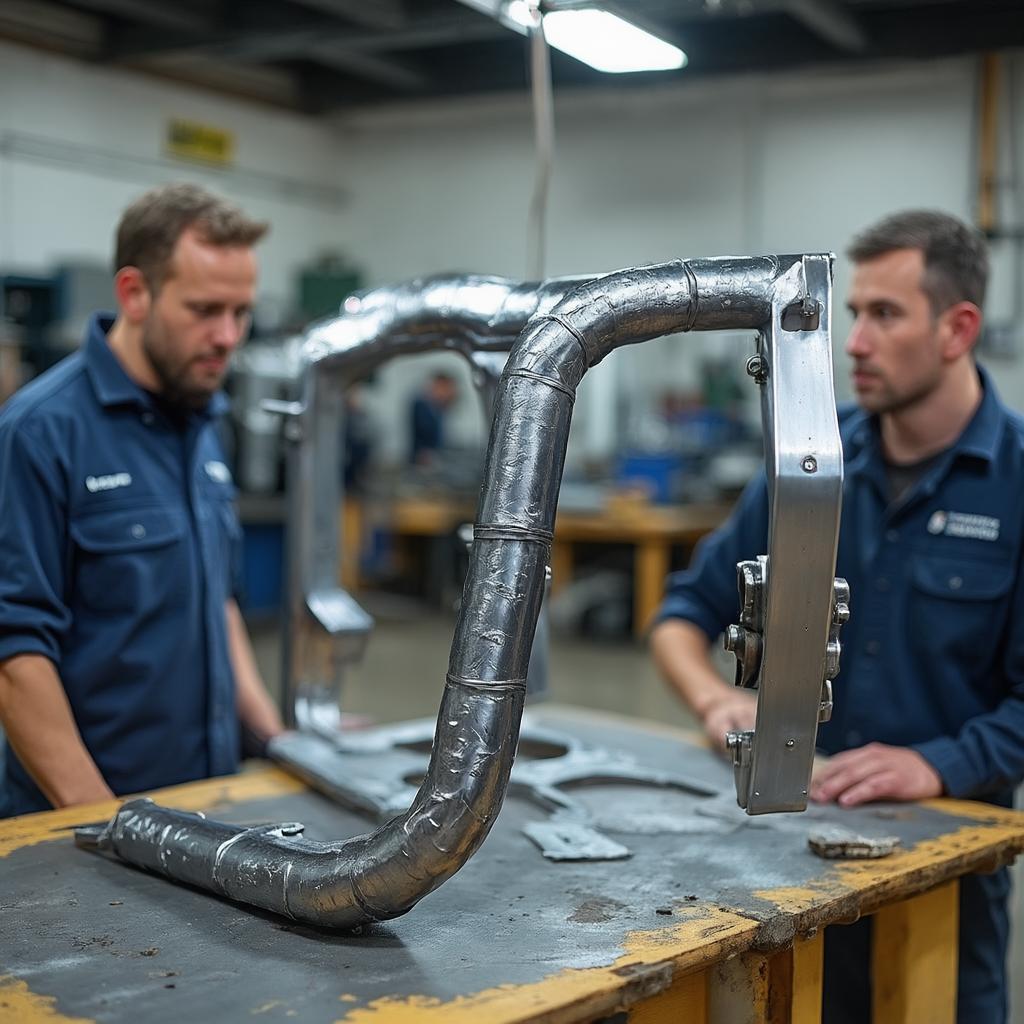
Static load test. Place 150kg of weight on the seat centre for 30 minutes. Check frame deformation at the leg joints. Any visible bending means the wall thickness or alloy grade is underspec. One chair per 100 in the batch. If it fails, expand the sample to 5 per 100.
Wobble test. Place the chair on a flat surface. Push sideways on the backrest with 30kg of lateral force. The legs should not lift, the frame should not twist. Leg splay under lateral load is the number one failure mode on budget steel chairs.
Cycle test. Open and close the folding mechanism 20 times. Smooth operation, no grinding, no loosening. If the hinge rivets work loose by cycle 15, they weren't peened properly.
Fabric rub test. Take a fabric offcut and rub it against a rough surface 30 times with moderate pressure. If the PU coating delaminates or the weave frays, the fabric won't survive gravel and concrete banks. Reject the batch or negotiate a fabric upgrade.
Leg lock test. Extend and retract each leg 20 times. The locking click should remain crisp and positive. If it softens by cycle 15, the spring gauge is wrong. Reject.
Mud foot swivel. Rotate each mud foot through its full range. Should move smoothly with moderate resistance. If it binds or spins freely, the ball joint tolerance is wrong.
These six tests take 15–20 minutes per sample and catch roughly 85% of the defects that become warranty claims. If your factory won't let you do them, ask why.
How Many Chairs Fit in a Container? (And Why It Matters for Your Margin)
A folded fishing chair in its carry bag occupies about 54×15×65cm, roughly 0.053 CBM. In a 40HQ container with 68 CBM usable space, that's about 1,100–1,280 chairs depending on packing efficiency.
At factory-gate $15 per aluminium chair, your total order value is around $16,500–19,200. Sea freight from Qingdao to Rotterdam at roughly $3,500 (Q2 2026): landed cost per chair approximately $17.70–18.20, excluding duty and VAT.
Compared to a bedchair (0.11 CBM, ~550 per 40HQ) or a bivvy (0.08 CBM, ~750 per 40HQ), the fishing chair is a container-efficient product. You get roughly twice as many chairs as bedchairs in the same container. That means lower per-unit freight cost and more margin cushion for price-sensitive markets.
For mixed-container programmes (chairs plus bedchairs plus cradles), chairs are your volume filler. They're the product that maximises container utilisation while the premium items (bivvies, overwraps) drive the margin. For a complete breakdown of how these products interact in a procurement programme, see our bedchair sleeping system OEM guide.
What's the One Question Smart Buyers Ask?
I've sat across the table from hundreds of distributors over 15 years. The ones who know what they're doing don't start with price. They start with this:
"Show me your last six months of weld rejection data."
Every factory has weld rejections. The question is whether they track them and whether they'll show you. A factory that can pull up a spreadsheet with rejection rates, root cause analysis, and corrective actions is a factory that manages quality systematically. A factory that says "we don't track that" or "our welding is perfect" is either disorganised or dishonest.
One follow-up question that also works: "What's the most common warranty claim on your fishing chairs, and what did you change to fix it?"
A good answer: "Armrest stitching was pulling out after heavy use. We switched from single-stitch nylon to double-stitch bonded polyester with bar-tack reinforcement. Claims dropped 80% in the next production run."
A bad answer: "We don't really get warranty claims." Every product gets warranty claims. If your factory claims otherwise, they're either not tracking returns or not being honest about them.
Ask both questions. Watch the response. It tells you more about the factory than any audit certificate.
Sourcing OEM Fishing Chairs?
We've been on the Shandong production floor for over 15 years, welding chair frames and cutting foam before most of our competitors existed. If you need a spec review of your current PO, a second opinion on factory quotes, or a full OEM fishing chair programme, get in touch.
Contact Us About OEM Fishing Chairs